







Modeling Paste White & Deep Black – Reliefs in Real Time
Our Modeling Paste Smooth White and Modeling Paste Smooth Deep Black (formerly called filler) are used to create structures in artworks. This builds tension in the picture and creates a three-dimensional effect.

What makes our modeling paste special
Its consistency is like a smooth cake batter. It spreads beautifully, ideally with a palette knife. You can scrape it off again and move it around, so you can position it exactly where you want it on your artwork. After drying, the surface stays absorbent. With a slightly thicker application and exposure to heat, fine cracks can also form on the surface. The surface can then be worked on with Acrylic Paint, Aquarylic Color, pigments and much more.

Modeling paste combined with our fillers
While the modeling paste is still wet, you can work in fillers such as Gray Stone Powder, Iron filings and more. The more unevenly you do this, the more exciting the result. Iron filings that are still visible after drying can be oxidized afterwards.
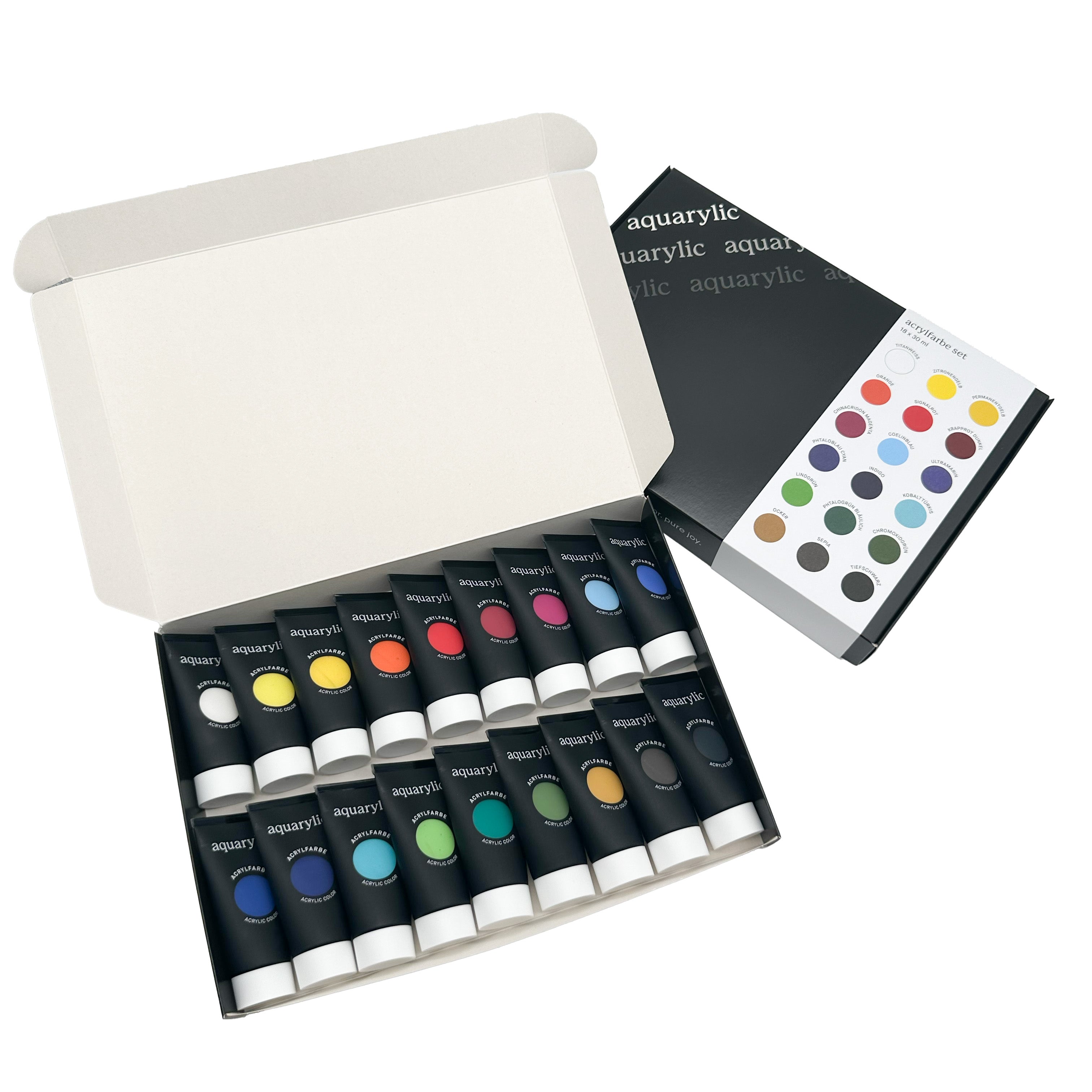
Modeling paste combined with Aquarylic Color and Chalk Paint
Using a painting knife, alternately apply modeling paste and Chalk Paint White over large areas of your still blank canvas. Use the materials generously and place the two partly next to each other and partly on top of each other. Aim for contrast by applying both thinner and thicker elements. Then let the surface set for no more than 15 minutes. In the meantime, dilute the Aquarylic Color 1 : 1 with water in a cup and prepare one slightly stronger and one slightly lighter color. Pour this color mixture generously onto your canvas.

Modeling paste combined with collage
You can use the modeling paste to embed all kinds of papers or other materials. This technique is especially popular in abstract work.
Sealing? Only at the very end! The paste stays open & absorbent – perfect for taking on more glazes. Only seal once no more paint is going on.
Tip: work wet‑on‑wet
Because it holds its shape so well, you can paint or pour directly into the fresh modeling paste – without the base drying out. Perfect for flowing transitions and drip effects.
FAQ
Can I rework modeling paste several times?
Yes. The paste reactivates layers of paint, keeps its shape and stays absorbent.
How do I create fine cracks?
Thick application + a short blast with the hair dryer = a natural crackle look.
Conclusion
Whether bold reliefs or fine textures – our modeling pastes give you maximum flexibility and an instantly visible effect. Have fun experimenting!