






Iron Filings – Texture, Sparkle, Rust Poetry
aquarylic know‑how
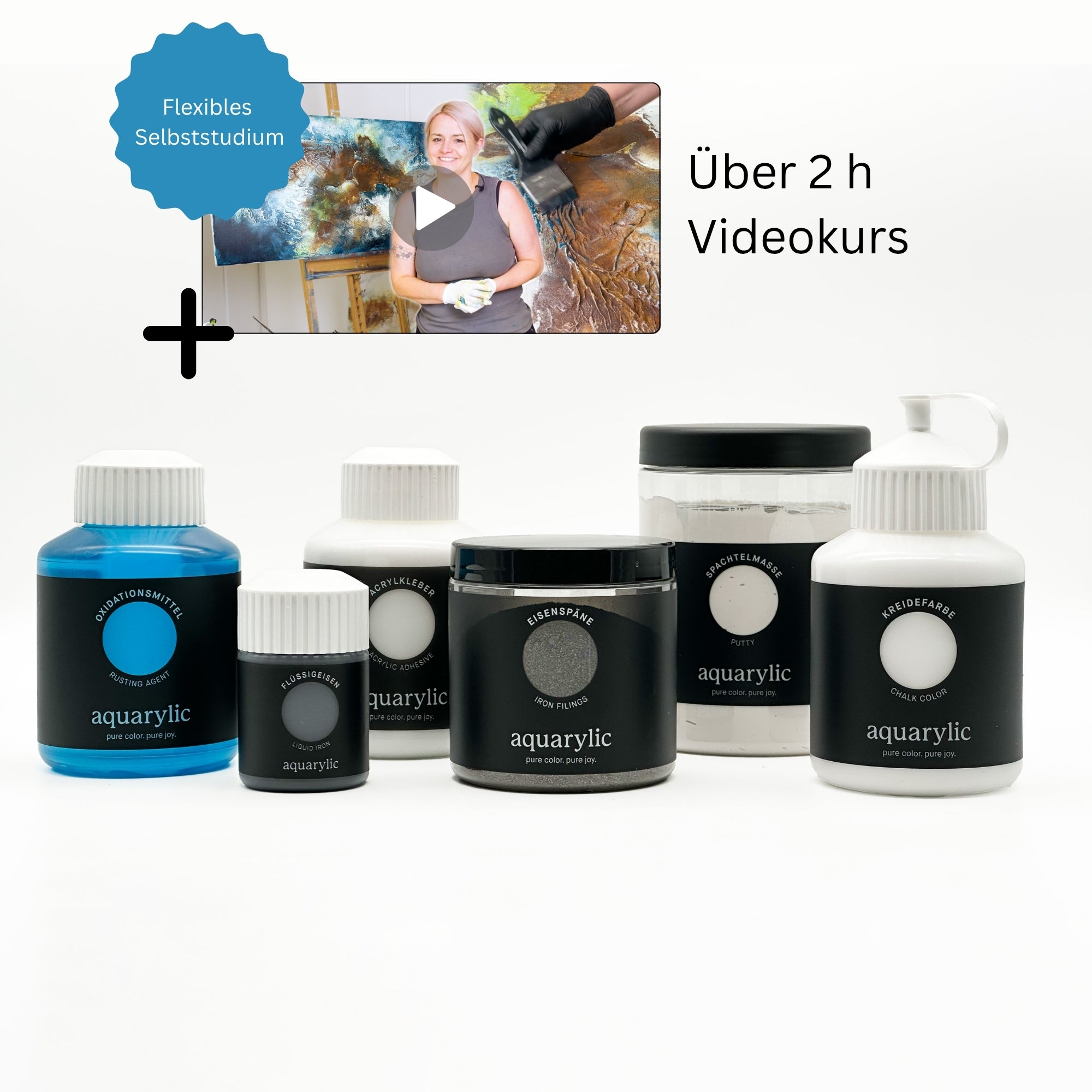
Iron filings conjure up coarse texture & sparkling highlights. Every metal grain reacts differently – a real adventure playground for rust fans.

1. Micro‑Chemistry, Macro‑Look
Every single filing develops its own patina. Recesses rust more slowly than peaks – which adds depth and natural color gradients.
2. Which binder creates which effect?
Acrylic adhesive
Sharply defined islands – ideal for graphic work.
Chalk Paint
Submerged grains stay gray, visible ones glow orange.
50:50 pour
Flowing puddles with floating particles – reminiscent of crumbling walls.
Modeling Paste
Model rocks & textures; simply press the filings in.
3. Oxidizing step‑by‑step
- Let the layer dry completely.
- Spray on a fine mist of oxidizing agent – the grains must glisten.
- Wait 1–3 h · more rust = spray again.
Note on varnish: a clear varnish noticeably deepens the rust tone. Test on a small area first, or leave the patina unsealed so it keeps developing.
4. FAQ
Do I need to seal iron filings?
No. Many artists love the liveliness of untreated rust. If the artwork should stay dust-free, seal it only once the desired color has been reached.
Do the filings work without an oxidizing agent?
Yes, but it takes weeks. Our oxidizing agent delivers rust in hours.
5. In the mood for smooth rust?
Take a look at Liquid iron – for a silky, opaque patina. Combined, the two products create two‑tone rust that no pigment can imitate.